Last updated November 21, 2026
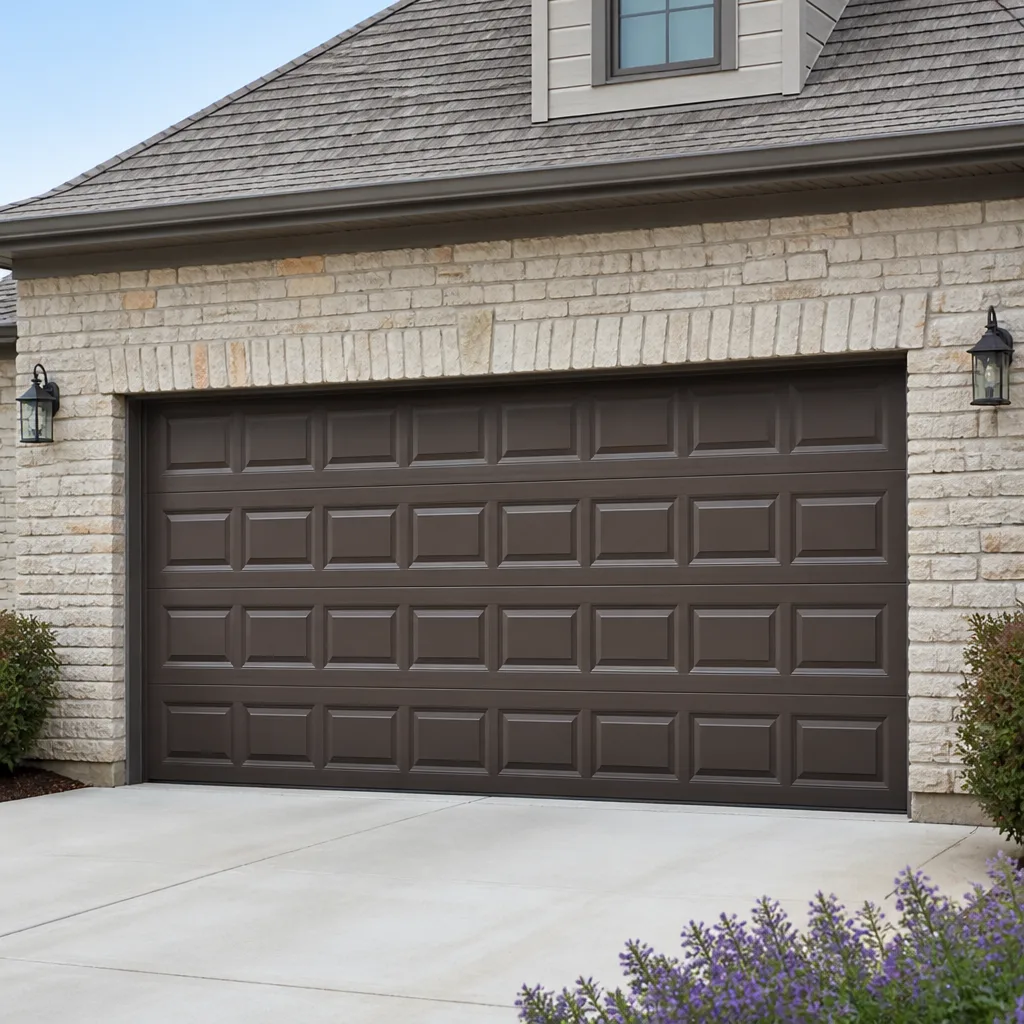 Raised-panel steel
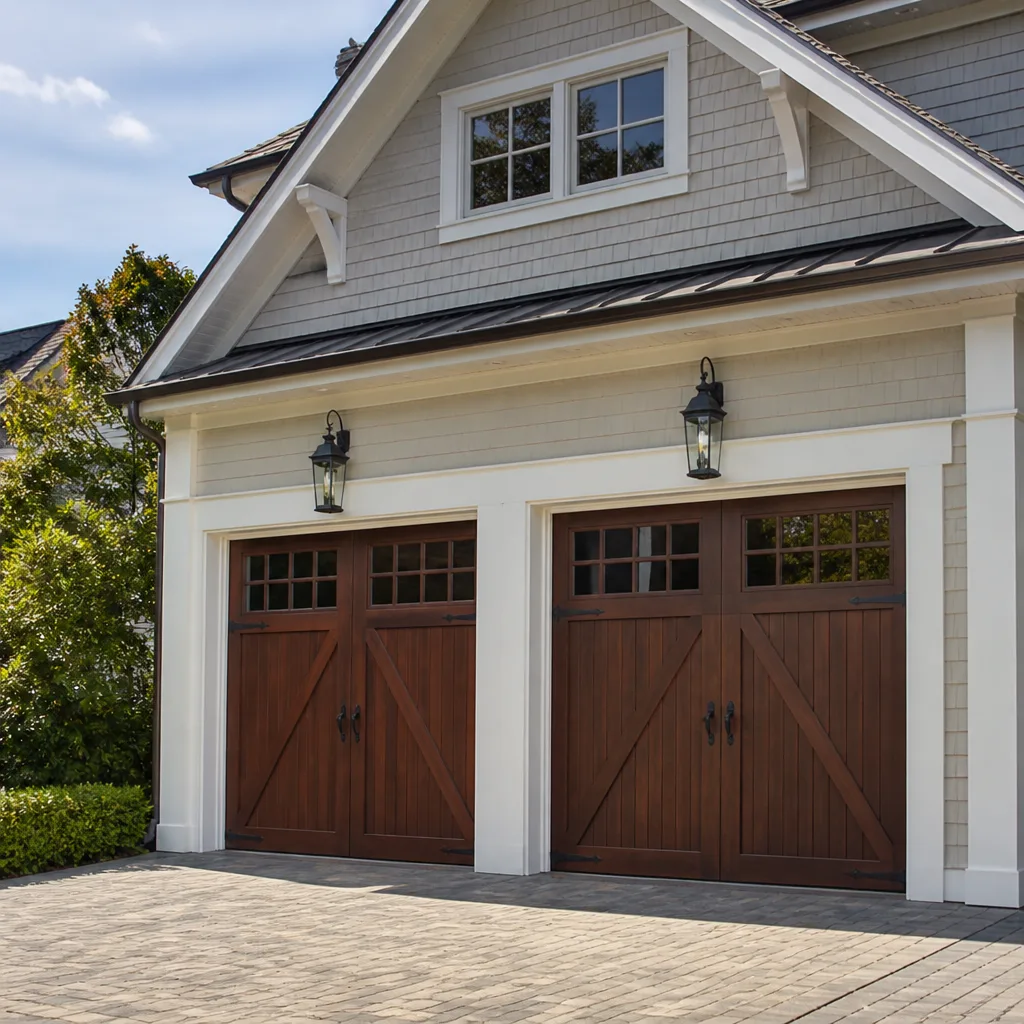 Carriage house
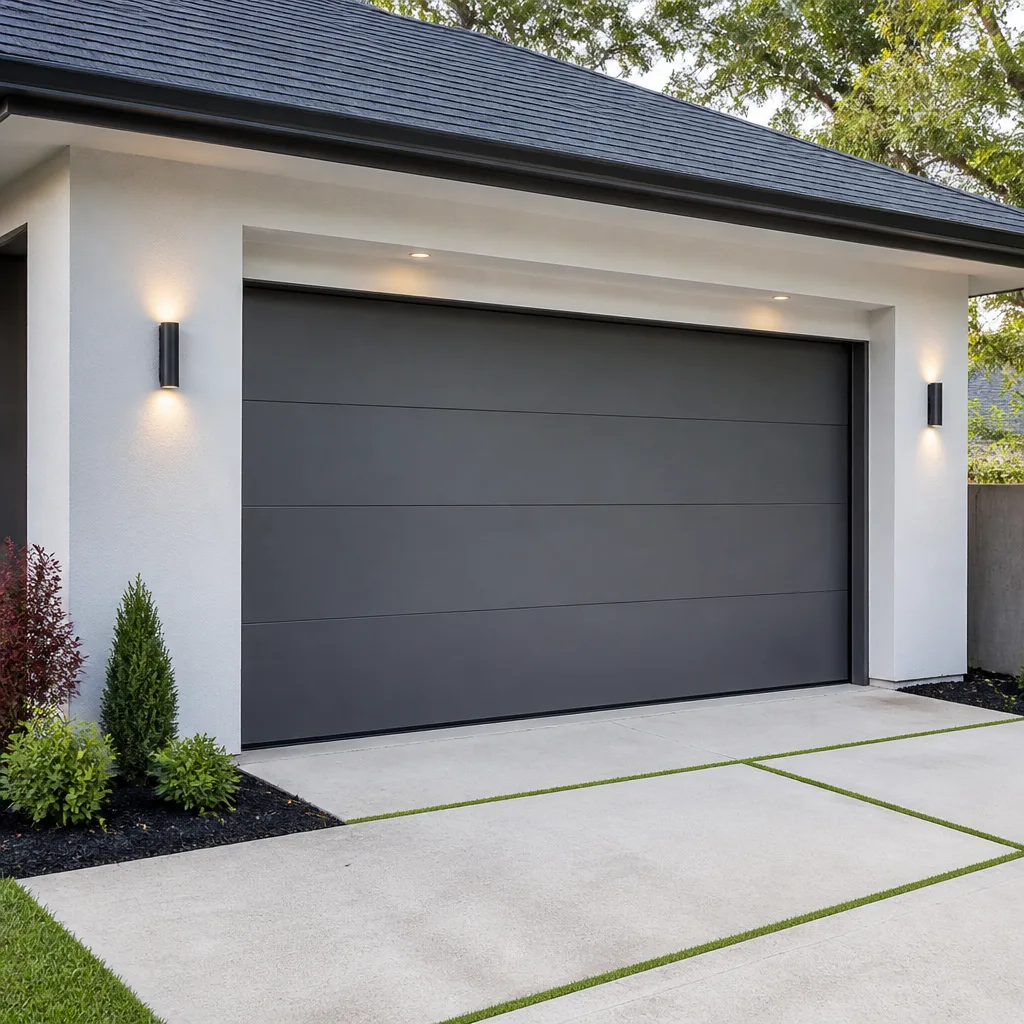 Modern flush
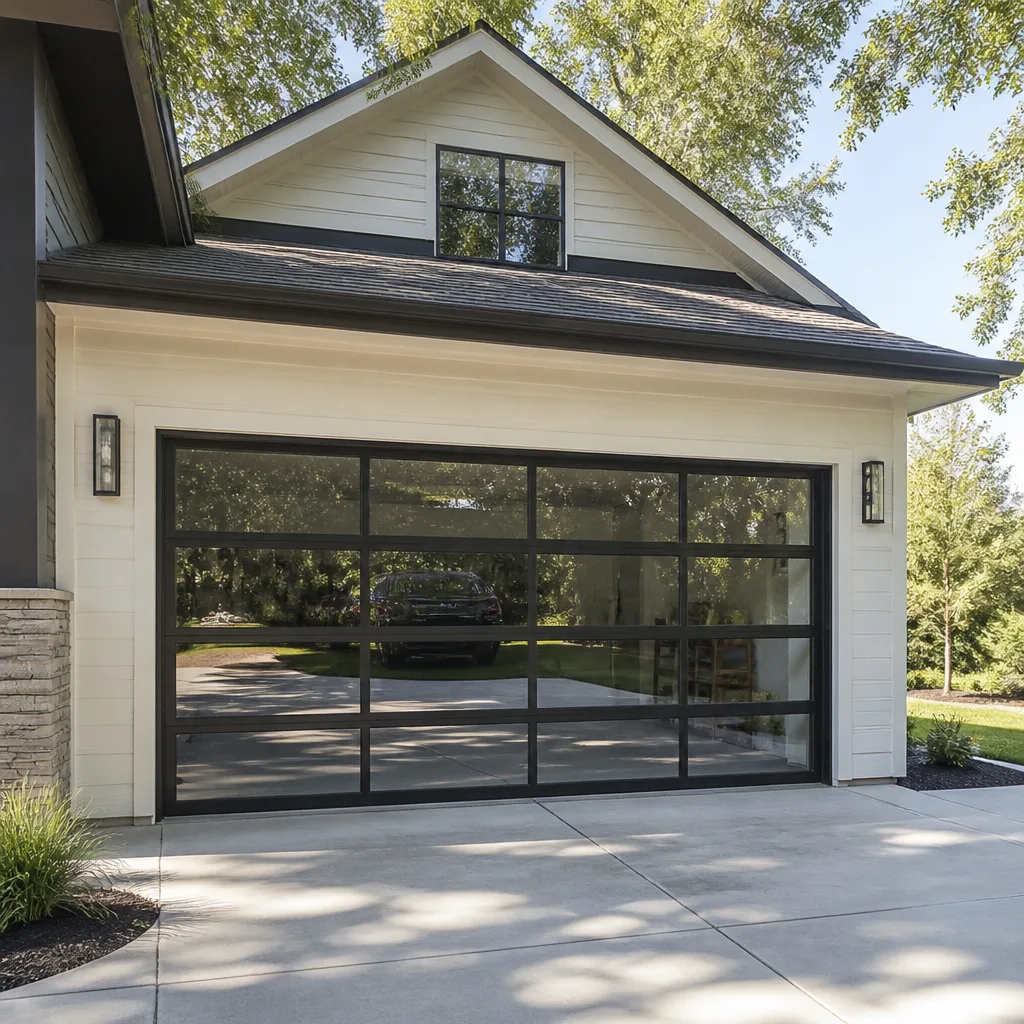 Full-view glass
 LiftMaster openers
 Chamberlain openers
Full 25-point door and opener safety check with every visit - springs, cables, rollers, tracks, and your LiftMaster or Chamberlain opener included
You get a price before we start. It does not change when the pro arrives.
Get your free estimateGarage Door Warning Signs: A West Roxbury Homeowner’s Reference Guide
Most warning sign lists start with the door not opening. By then, you’ve already lost the morning and probably a day of work. A garage door rarely fails without telling you first. It vibrates a little differently. It rises unevenly. A sound shifts in pitch over a few weeks, low enough that you stop hearing it. Each of those signals points to a specific component that’s wearing out, and a homeowner who can describe what they’re seeing and hearing saves a technician half the diagnostic work. This guide works backward from the failures we diagnose on service calls in West Roxbury, matching early physical signs to the part that’s failing before it becomes an emergency.
Quick Answer
Garage door warning signs fall into two groups: sounds and movements. Grinding, scraping, or a rattle that changes pitch usually points to a worn roller bearing, a dry cable drum, or a loose track bolt. Uneven travel, hesitation on the way up, or a door that reverses on the way down points to spring tension loss, sensor misalignment, or bottom seal compression. Any sign involving a broken spring, a frayed cable, or a door that won’t stay up belongs in the stop-using-it category.
Styles & brands we work with
- Raised-panel steel
- Carriage house
- Modern flush
- Full-view glass
- LiftMaster openers
- Chamberlain openers
Table of Contents
- What your garage door’s sounds are telling you
- Visual checks you can do from the ground
- Reading opener behavior as a diagnostic tool
- The West Roxbury warning: frost heave and track misalignment
- Your priority scale: stop, schedule, or monitor
- A seasonal walk-around for New England weather
- Why brand matters when you describe a symptom
- When to call a professional
What Your Garage Door’s Sounds Are Telling You
Sound is the earliest and most reliable diagnostic signal a garage door gives you. The trick is that each failure mode has a distinct acoustic fingerprint, and once you know the categories, you can describe the problem to a technician with enough precision that they arrive with the right part already identified. Here’s how we split them.
Grinding (low, rotational, steady). Grinding that follows the door up and down usually comes from a dry or worn cable drum, where the cable is riding against a rough surface. It can also come from a torsion shaft bearing that’s lost its lubrication. The sound is continuous and matches door travel.
Squealing or chirping (high-pitched, rhythmic). A worn roller bearing or a steel roller with a flattened spot produces a chirp once per revolution. If the chirp speeds up as the door moves faster, you’ve found a roller.
Rattling (clattering, intermittent). A loose track bolt, a nut that’s backed off a hinge, or a bracket that’s vibrating against the jamb. Rattles are usually the cheapest fix on this list and the most ignored.
A pop, twang, or bang followed by silence. That’s a spring releasing. Stop reading and skip to the priority scale. A door with a broken spring should not be operated, and a garage door spring repair is one of the few jobs where a homeowner should not attempt a workaround.
Creaking or groaning under uneven tension. Two springs that are supposed to be matched often aren’t. When one has more tension than the other, the door travels with a groan, and the torsion tube flexes. This is a matched-pair situation, not a single-spring fix, and we’ll cover the cost implications further down.
We’ve seen all four categories in West Roxbury, and the mapping from sound to part holds up year after year. What changes is how quickly a minor sound turns into a major one when the weather shifts.
Visual Checks You Can Do From the Ground
You don’t need a ladder to spot most early failures. Everything on this list is visible while standing on the garage floor with the door closed and then open. Take ten minutes once a season and run through it.
- Check the gap along the bottom. Close the door and look along the bottom seal. If the gap between the door and the floor is noticeably wider at one end than the other, the door is out of level, which points to a spring or cable problem, not a seal problem.
- Check the cables for slack. Look at the two cables running from the bottom corners up to the drums. They should be taut. A cable with visible slack, coils, or a birdcage shape at the drum is a hazard.
- Check for a visible spring gap. If you can see a gap in the coiled spring above the door, that spring is broken. This is a stop-doing-this signal.
- Check the track for rust patterns. Surface oxidation looks like a light, even dusting and is cosmetic. Active corrosion looks like pitting, flaking, or a reddish crust at the seams. Active corrosion changes the track geometry as the metal swells, and that’s when the door starts to bind.
- Check the rollers in the track. Look for flat spots, cracks, or a roller that’s missing a bearing cap. Steel rollers outlast nylon, but they also make more noise once they wear.
- Check the hinges and brackets. Look for rust streaks running down from a bracket. A rust trail means moisture has gotten behind the metal and the fastener is loosening.
One warning before any of this: never put a hand near a torsion spring, a cable, or the bottom bracket while the door is up. Those parts are under load, and they can release without warning. Visual inspection only from the ground. If you’re not sure what you’re looking at, describe it to us over the phone instead of getting closer. Our technicians have up to 11 years of experience with exactly these parts, and this is a job that requires it.
For a broader breakdown of what falls under routine vs. emergency work, our garage door repair page covers the patterns we see most often in residential service calls.
Reading Opener Behavior as a Diagnostic Tool
The opener isn’t just the motor – it’s a diagnostic feed. Its behavior tells you where in the chain the problem lives, which is why we ask homeowners to describe opener behavior in detail before we come out. The two patterns that matter most:
Hesitation on the way up. If the opener strains, pauses, or stutters as the door lifts but moves smoothly on the way down, the problem is almost always spring tension. The opener is doing work the spring should be doing, and it’s overheating in the process. Continuing to run the door in this state wears the opener’s motor and gear assembly faster than any other failure pattern. If your door hesitates, the spring is the suspect, not the opener.
Reversal on the way down. If the door starts down and then reverses before it closes, the safety sensors are misaligned, tripped, or blocked. It can also be bottom seal compression – a thick new seal or a swollen seal pushes back against the door and the opener reads the resistance as an obstruction. Sensor misalignment is the easier diagnosis: look for a misaligned lens, a dirty lens, or a cobweb, and check the indicator light. If the sensor lights are good and the door still reverses, the seal is the next suspect.
Other opener behaviors worth noting before you call:
- The opener clicks but nothing moves. Gear stripped, or capacitor failing.
- The door goes up part way and stops. Travel limit switch out of adjustment, or a thermal shutdown.
- The remote works intermittently. A battery issue, or interference from a nearby LED or smart-home transmitter.
- The wall button works but the remote doesn’t. The receiver, not the opener motor.
We work on all the brands that show up on West Roxbury street-facing garages – LiftMaster, Chamberlain, Genie, Craftsman, and Raynor among them – so when you describe an opener symptom, we can usually tell you whether it’s a repair or a replacement question within a day. That’s part of what makes garage door opener repair more targeted than a full unit swap. Most openers with these symptoms don’t need to be replaced. They need two parts and a technician who knows the brand.
The West Roxbury Warning: Frost Heave and Track Misalignment
New England winters do something to garage door hardware that homeowners elsewhere never see. Ground freeze pushes upward and outward, and if the concrete slab under a garage track has any movement in it, the vertical track on that side shifts out of plumb. It doesn’t move much – a fraction of an inch is enough – but a garage door is a precision mechanism in a sloppy frame. A track that’s out of alignment by even a small amount binds the door against the jamb, and you’ll hear it before you see it.
Frost heave shows up as track misalignment in West Roxbury in late winter and early spring, and it progresses in a predictable sequence:
- Faint scraping on one side as the door rises. The door is rubbing against the jamb-side track.
- A rattle that appears in cold weather and disappears on warm days. The track is shifting with the freeze-thaw cycle.
- The door hesitates or stops part way up. The track has moved enough to bind the door’s travel.
- The door won’t lift without help from the opener. The bind is severe, and the opener is now doing structural work it was never designed for.
If you catch it at stage one, a track adjustment is a quick fix. If you miss it until stage four, you’re looking at track work, roller replacement, and possibly an opener repair – all because a fraction of an inch of frost heave went unaddressed. The good news is that frost heave is visible from the ground if you look for it. See the seasonal walk-around below.
One local note: the older garages in the neighborhoods around Bellevue Hill and Centre Street tend to have slab-on-grade floors with no vapor barrier, which makes the frost-heave pattern more aggressive than in newer construction. If your garage was built before the 1990s, run the seasonal check more often.
Your Priority Scale: Stop, Schedule, or Monitor
Not every warning sign requires a call today. But some absolutely do, and the difference between them should be decided before you’re staring at a broken door. Here’s the scale we use.
Stop using the door – call today.
- A visible gap in the torsion spring, or a snap sound followed by the door not lifting.
- A cable with visible slack, coils, or a birdcage shape at the drum.
- The door won’t stay up on its own when lifted part way.
- The door has come off one track or is hanging off the roller.
- Any part of the door has separated from the frame.
Schedule within a week.
- Grinding or squealing that’s gotten louder over several weeks.
- A door that hesitates on the way up.
- Opener reversal on the way down that persists after you’ve cleaned the sensor lenses.
- A visible gap that’s wider at one end than the other when the door is closed.
- Track rust that’s pitted or flaking, not just cosmetically dusted.
Watch and monitor.
- An occasional rattle in cold weather that clears up when it warms.
- A roller that chirps but doesn’t stick.
- Surface-level oxidation on the track with no pitting.
- An opener remote that works only from certain angles – usually a battery.
The threshold between “monitor” and “schedule” is the trend. If a sound or behavior is stable, monitor. If it’s gotten worse since the last time you noticed it, that’s a schedule. And if it’s on the stop list, don’t wait to see if it gets better – garage door springs don’t heal.
A Seasonal Walk-Around for New England Weather
The single biggest factor in garage door longevity in West Roxbury is how often you look at the door between major weather changes. Four times a year is enough, and each check takes less than ten minutes. Here’s what to do at each point on the calendar.
End of winter (March). Walk the vertical tracks on both sides and check for frost-heave misalignment. Look at the gap along the bottom of the door – is it even? Run the door up and back with the opener disconnected and listen for scraping on one side.
Start of spring (April or May). Lubricate the hinges, rollers, and any torsion shaft bearings with garage-door-rated lubricant, not WD-40. Check the bottom seal for cracks – a dried seal is a common cause of opener reversal on the way down in the summer.
End of summer (September). Check the rollers and track bolts. The angle of the sun in late summer brings out track surface rust that’s easy to miss earlier in the year. Confirm that the safety sensor alignment hasn’t shifted over the season.
Start of winter (November). Test the opener’s reversal on the way down. Confirm the bottom seal still makes contact all the way across. Clear any debris from the track and confirm the door opens and closes fully before the first hard freeze.
We treat garage door installation and repair as one continuous lifecycle, and this schedule is a good line-item to keep if you’re deciding whether to repair a door or replace it. If you’re doing the walk-around and finding more and more items each season, that’s a sign the door is due for something more than a repair.
Why Brand Matters When You Describe a Symptom
We service equipment from eight major brands – LiftMaster, Chamberlain, Genie, Craftsman, Raynor, Clopay, Amarr, and Wayne Dalton – and each brand behaves a little differently when it fails. Not in a way that changes the priority scale, but in a way that changes the diagnosis and the parts order.
A Craftsman opener, for example, tends to fail on the gear assembly before the motor does, so the “clicks but doesn’t move” symptom on a Craftsman is almost always a gear replacement, not a new opener. A Raynor door, which tends to ship with heavier hinge hardware, is less prone to the loose-hinge rattle and more prone to worn rollers on the same schedule. Chamberlain and LiftMaster share a lot of internal architecture, which means the same symptom often points to the same part, and the repair is usually quicker to diagnose because the parts are predictable.
The practical takeaway: when you call, tell us the brand on the opener and on the door. Both matter, and they’re often different. We stock and supply garage door parts directly, so a diagnosis that names the brand usually means we can confirm the part before scheduling rather than after. That reduces the chance of a two-visit repair, which is a big deal when the door is stuck and you need it working.
You don’t have to know your brand to call. If you don’t, take a photo of the opener’s casing and the hinge plates on the door, and we’ll figure it out. That’s part of the West Roxbury Garage Door Repair approach – identify the equipment first, then decide the repair.
For a broader look at our full set of services and the way we sequence a diagnostic, garage door repair in West Roxbury is the right starting page. If you’re already sure it’s the opener, go straight to garage door opener repair. And if the door has been repaired repeatedly and you’re weighing replacement, garage door installation covers what a full replacement involves.
Common Mistakes to Avoid
- Ignoring a sound until it becomes a failure. The most expensive garage door calls in West Roxbury are the ones where a grinding cable drum ran for weeks before the door stopped. By that point you’re replacing the drum, the cable, and possibly the torsion assembly.
- Greasing a torsion spring. Torsion springs should not be lubricated. Greasing a spring attracts grit, which accelerates wear and changes the way the spring coils. Stick to hinges, rollers, and bearings.
- Adjusting spring tension yourself. This is the leading cause of serious injury on garage door repairs. Two properly sized winding bars, an understanding of torsion math, and a healthy respect for the stored energy are the tool kit – and if any of those is missing, it’s a professional job. We don’t recommend it for homeowners.
- Assuming the opener needs replacing when it’s hesitating. A hesitant door almost always has a spring tension problem, not an opener problem. Replacing the opener first is a common and expensive mistake.
- Running the door when frost heave has misaligned the track. A door run against a misaligned track damages the rollers, the hinges, and eventually the door panel itself. Stop using the door at the first sign of a one-sided scrape.
- Assuming a reversing door is a sensor problem. Reversal on the way down can also come from bottom seal compression, especially after a new door mat has been laid. Check both before ordering parts.
- Replacing a single spring when a matched pair is needed. On a two-spring door, replacing one leaves the door running under uneven tension, which wears the torsion shaft and stresses the door’s balance. A pair is the standard replacement.
- Skipping the seasonal walk-around. A ten-minute check four times a year catches frost heave, corrosion, and roller wear before any of them turns into a service call.
See the difference
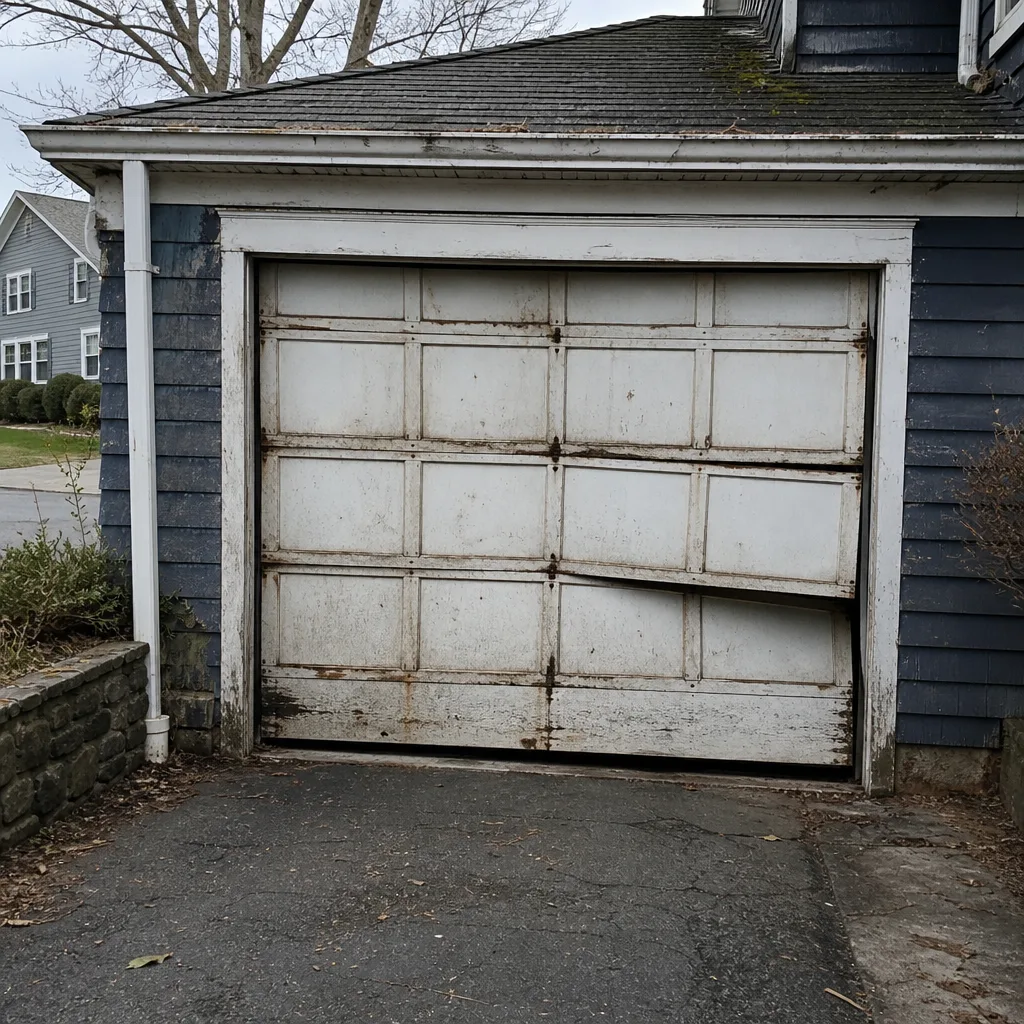 Before
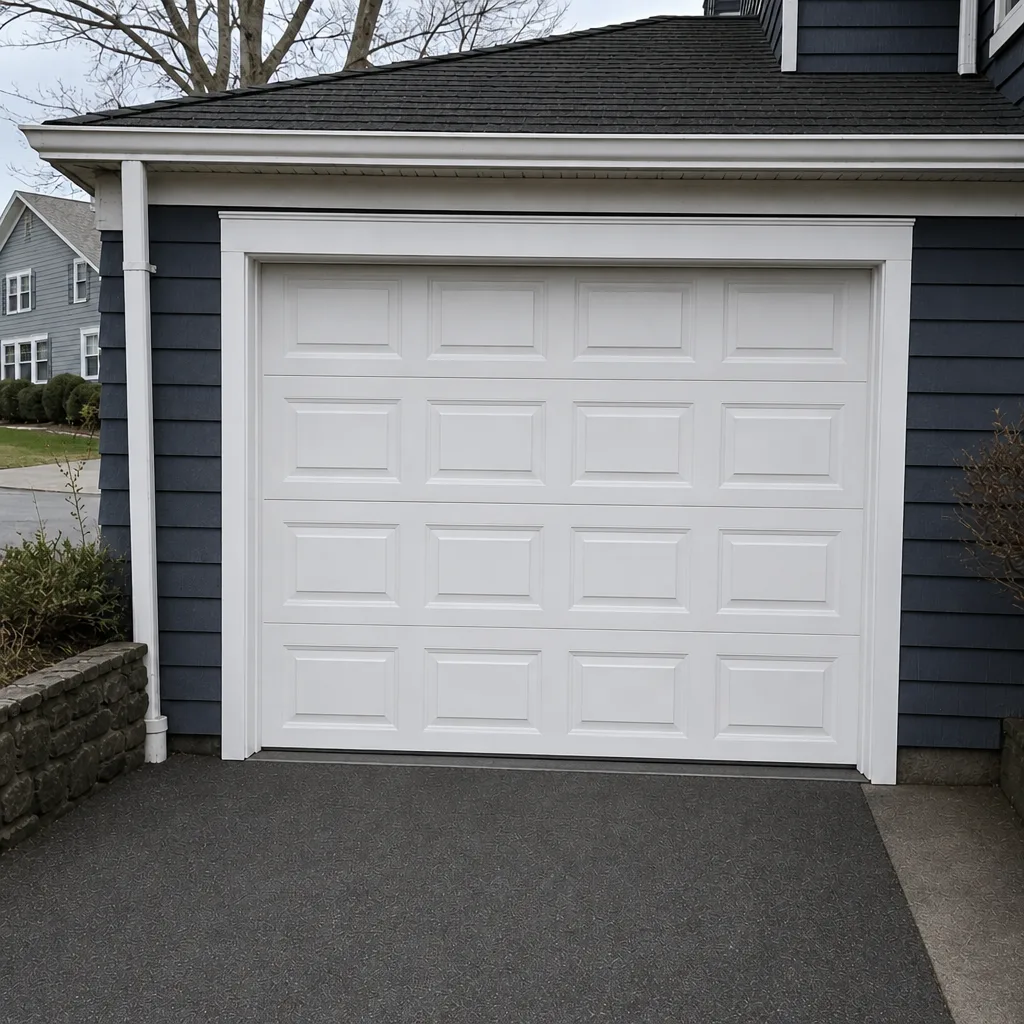 After
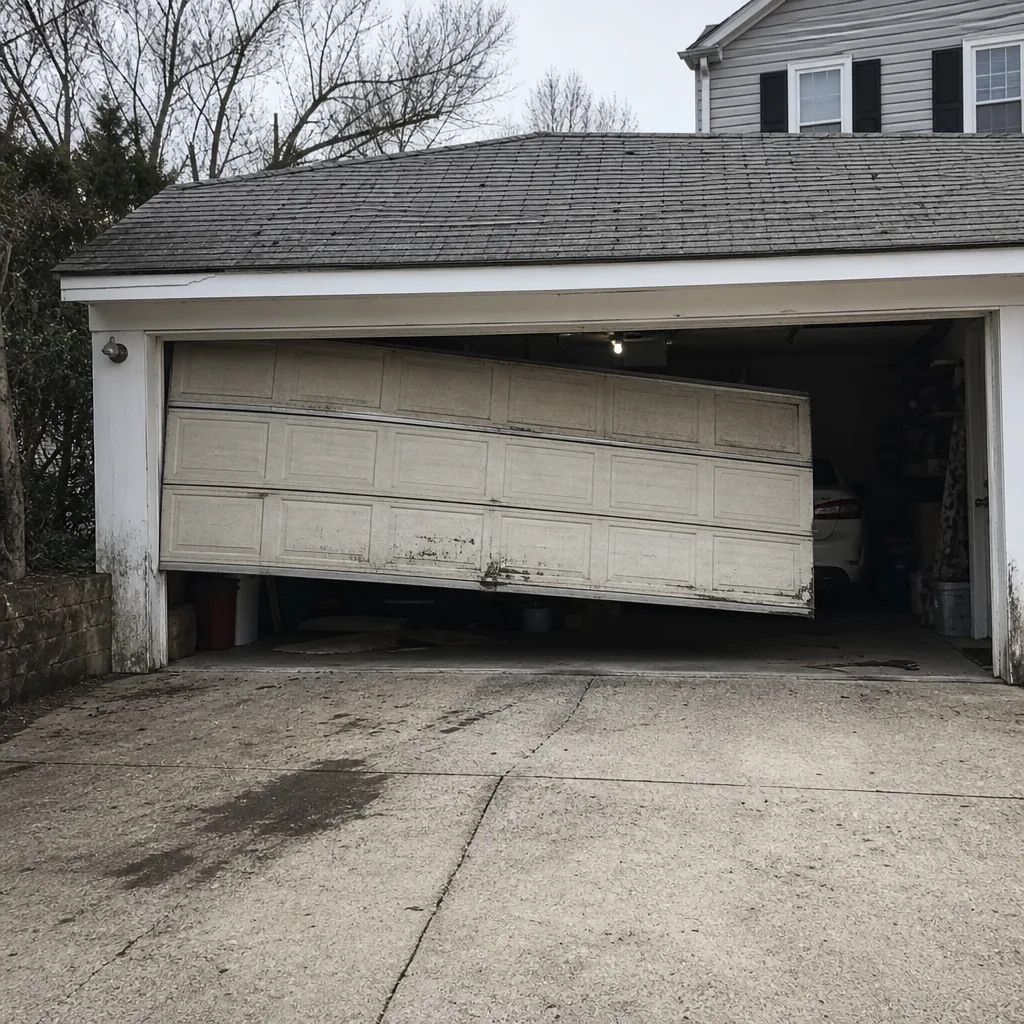 Before
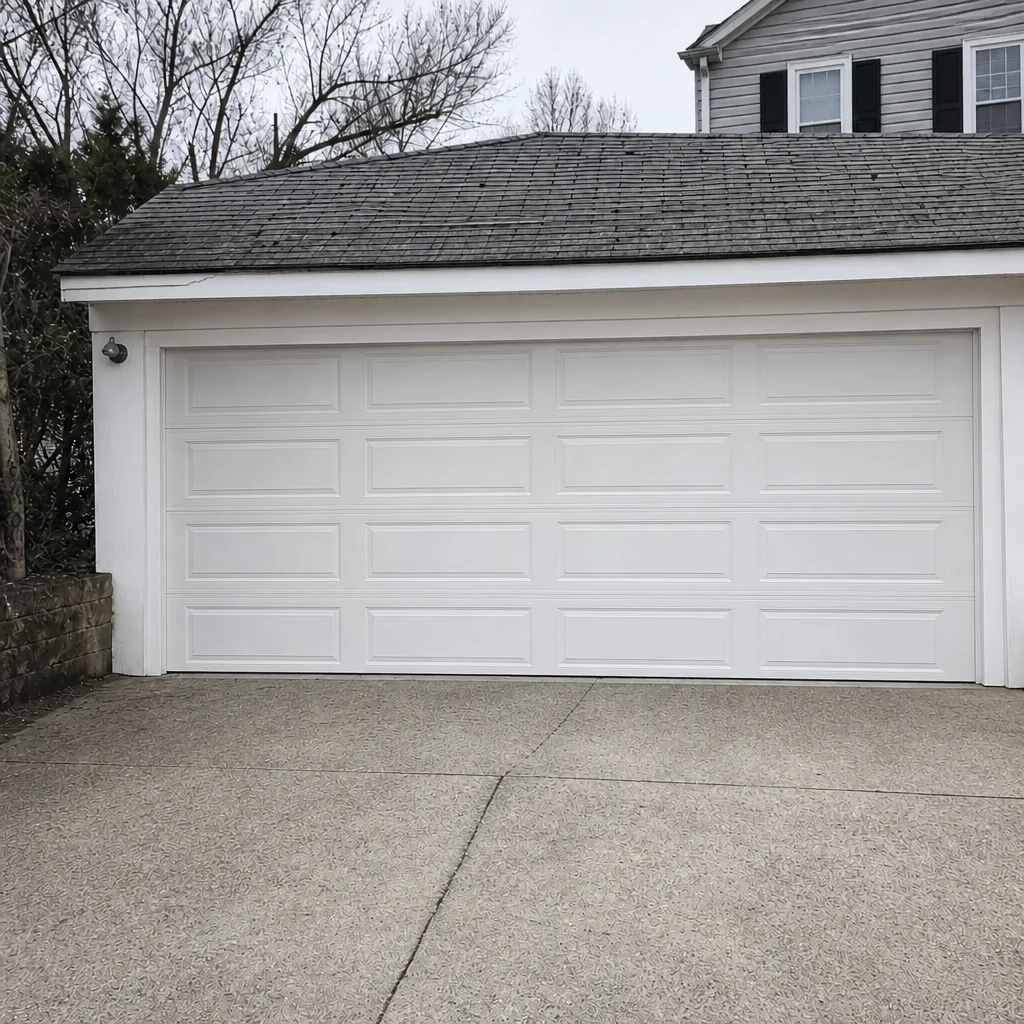 After
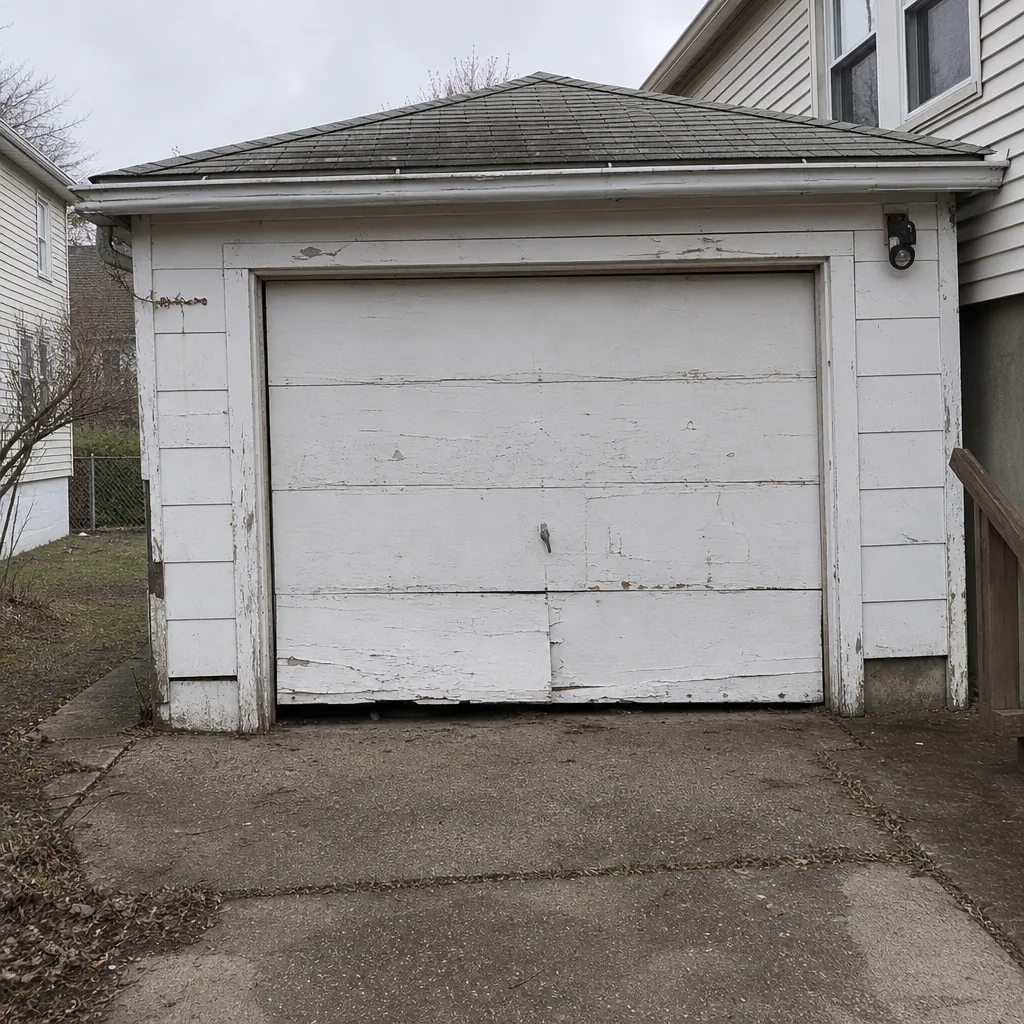 Before
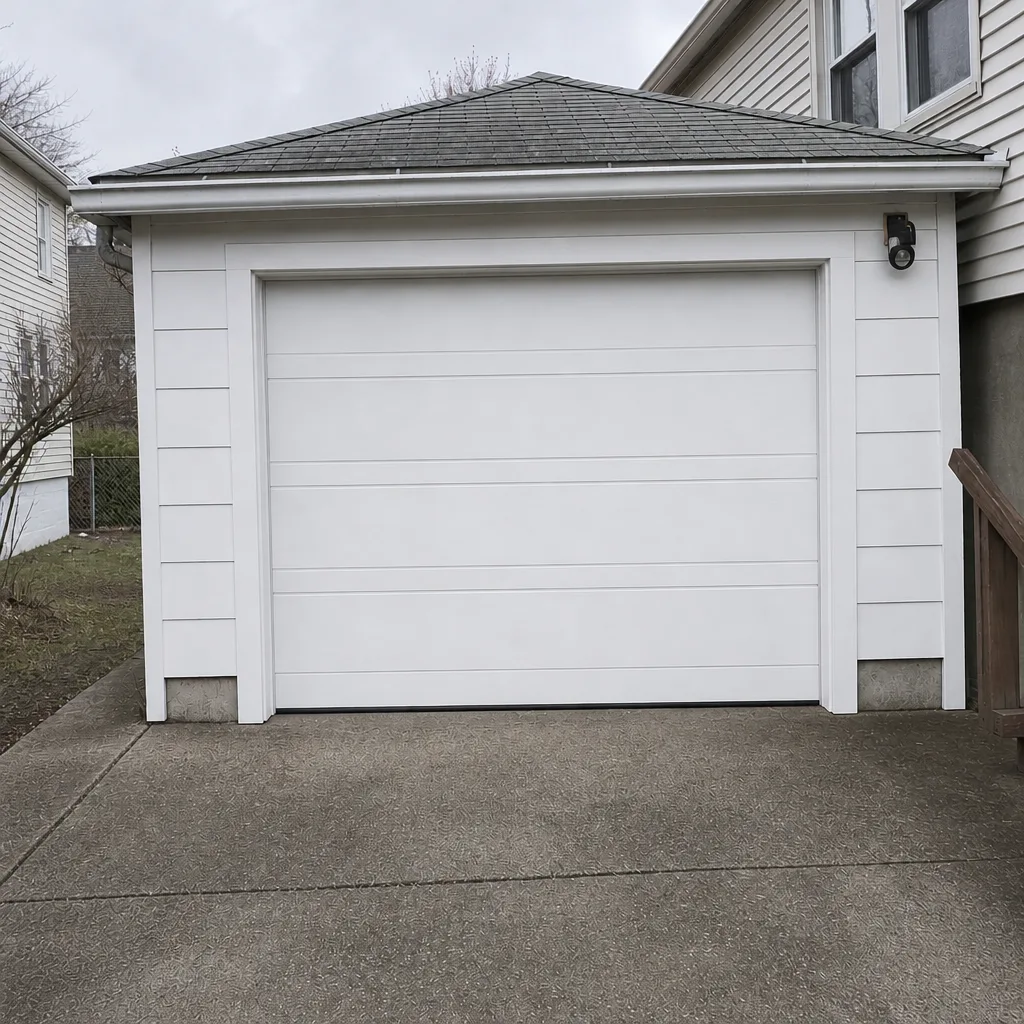 After
When to Call a Professional
Call us the same day if a spring has snapped, a cable is frayed or slack, the door has come off its track, or the door won’t stay up on its own. Those are safety issues and should never be worked around. Schedule us for the same week if you’re hearing grinding, hesitation on the way up, or repeated reversal on the way down – those are signs of a component that will fail, and we can usually identify the failing part before it does. If you’re unsure which category you’re in, describe the sound and the door’s behavior over the phone and we’ll tell you honestly whether it’s a stop, a schedule, or a monitor.
West Roxbury Garage Door Repair offers free estimates in West Roxbury – call (855) 658-4358. We work on the brand you already have, and every estimate is a written price agreed before any work starts.
Frequently Asked Questions
The most common early signals are a new grinding or squealing sound during travel, a door that hesitates on the way up, a visible gap wider at one end when the door is closed, and an opener that reverses before the door fully closes. Ranked by urgency: a broken spring or slack cable is a stop-use signal; grinding, hesitation, and repeated reversal are schedule-within-a-week signals; an occasional cold-weather rattle or a chirping roller is a monitor signal.
Spring repair is priced per spring, and a matched pair is usually replaced together, so the pair typically costs about twice a single spring. Because the price depends on the door’s weight, the spring type, and whether only one or both springs need replacing, the exact price is set by a written estimate after we’ve looked at the door. Call (855) 658-4358 for a free estimate – estimates are free, and the price is agreed before any work starts.
For same-day repairs on safety-critical issues – a snapped spring, a slack cable, a door off its track – we do our best to get to you the same day. For non-urgent repairs we schedule the first available slot, which is usually within the week. If your door is stuck and you’re not sure if it’s urgent, call (855) 658-4358 and describe what you’re seeing. We can usually tell you whether it’s a today issue or a this-week issue over the phone.
No. We quote a written price after we’ve seen the door and agreed what needs to be done, and that price holds. If we discover a secondary problem during the repair – a worn roller, a hinge that’s bending, a cable that needs replacing alongside the spring – we stop, explain what we found, and quote the additional work separately. You approve it before we continue. You won’t get an invoice bigger than the quote unless you’ve approved the change.
The local pro we connect you with is licensed and insured as their state requires, and our technicians have up to 11 years of experience working exclusively on garage doors. We don’t hand off your door to a general handyman – garage doors are all we do. That specialization matters most on spring and opener repairs, where brand-specific tooling and training are the difference between a repair that lasts and one that fails again next winter.
Cold-weather-only scraping or binding usually points to frost heave that’s shifted a vertical track out of plumb, or to a bottom seal that’s hardened and pushing back against the opener. The frost-heave pattern is very common in West Roxbury because ground freeze pushes against the slab under the track, and older slabs without a vapor barrier are more prone to it. A door that scrapes on one side in cold weather and runs smoothly in summer is almost certainly a track alignment issue, not a roller or spring problem – and it’s cheapest to fix in late winter before the misalignment damages the rollers.
The Bottom Line
A garage door rarely fails without warning. The sounds, the travel, and the opener’s behavior all give you weeks of notice if you know what to look for. The four sound categories (grinding, squealing, rattling, and the pop of a spring) map directly to the part that’s failing. Nine visual checks can be done from the ground without a ladder. The opener’s behavior – hesitation up vs. reversal down – points to spring tension or sensor and seal issues respectively. And in West Roxbury, the frost-heave pattern in late winter is the single biggest preventable cause of a spring-to-summer repair. Watch the trend, sort every sign into stop, schedule, or monitor, and call before the stop category becomes your morning problem.
If any of what you’ve read matches what your door is doing right now, call (855) 658-4358 for a free estimate. We’re a specialist shop, not a generalist, and we’d rather tell you it’s a watch-and-monitor item than sell you a repair you don’t need.
Written by the team at West Roxbury Garage Door Repair.